When the wind carries the scent of mustard flowers and bamboo is set aflame in fields across Assam, it signals the arrival of Bihu—a festival so intertwined with Assamese identity that it defines the very essence of the region's culture and agricultural heritage.
The Three Faces of Bihu
Bihu is not one festival, but three, each marking different seasons and agricultural milestones. These three celebrations—Rongali Bihu, Bhogali Bihu, and Kongali Bihu—flow throughout the year, maintaining a perpetual connection between Assamese people and their land.
"Bihu is the rhythm of our soil, the celebration of our harvest, and the song of our ancestors. It flows through our veins as surely as the Brahmaputra flows through our land."
Rongali Bihu: The Spring Festival
Rongali Bihu, celebrated in April, marks the beginning of the agricultural year and the harvest of spring crops. It's the most vibrant and joyous of the three Bihu celebrations, bringing an explosion of color, music, and dance across villages and cities alike.
The Essence of Bihu Celebrations
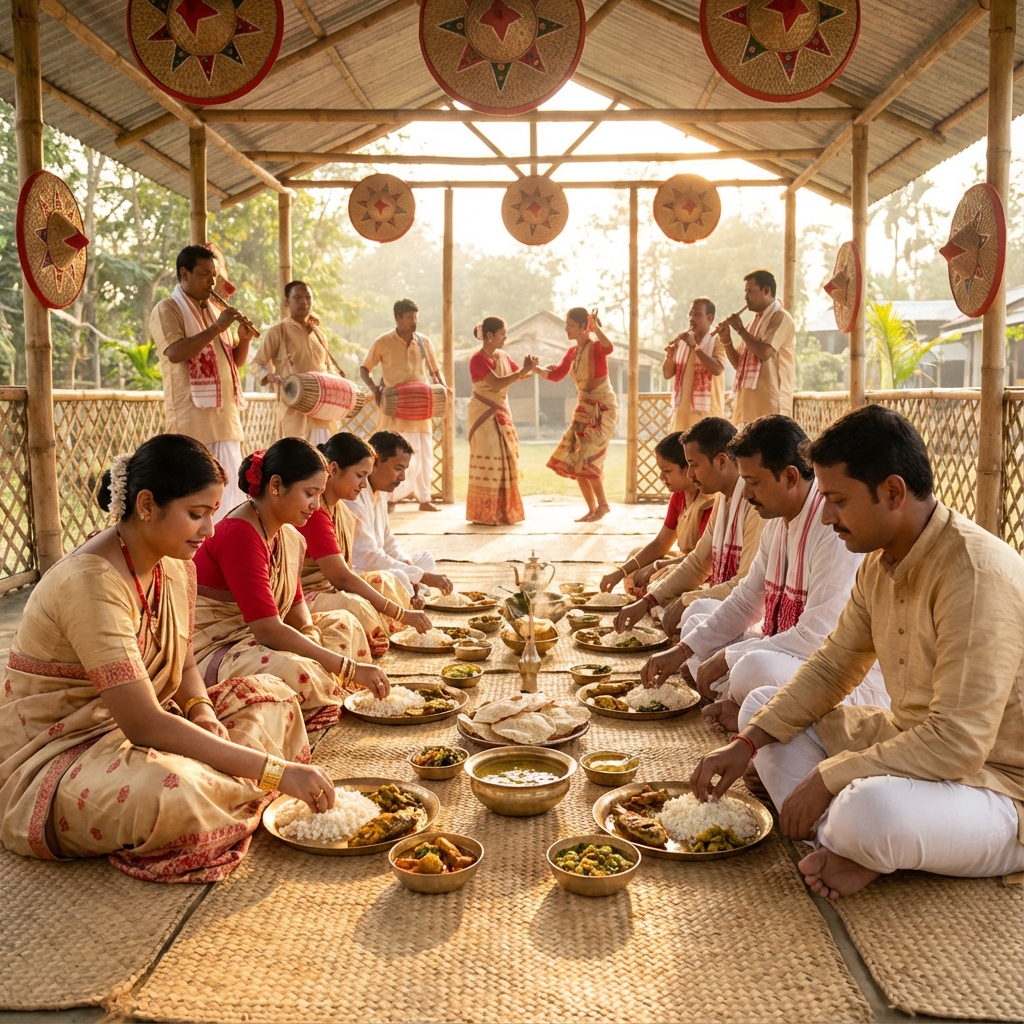
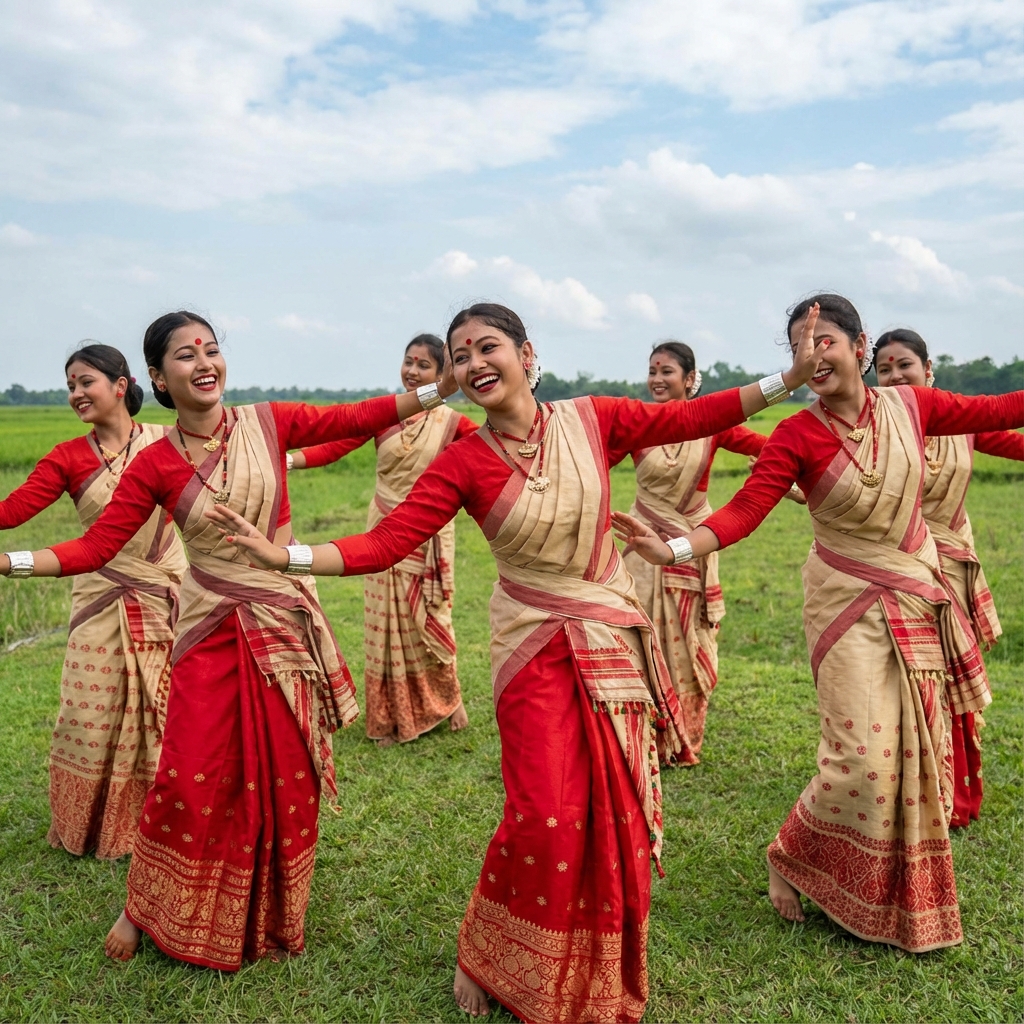
What makes Bihu unique is its deeply communal nature. Unlike many festivals that are primarily family-centered, Bihu celebrations belong to the entire village and community. Young girls dance the Bihu dance in the open fields, boys showcase their strength, and every household prepares special foods.
Bihu Dance: Poetry in Motion
The Bihu dance is perhaps the most iconic representation of the festival. Young women form circles and move in synchronized steps, their bodies swaying like paddy crops in the wind. The dance is sensuous yet innocent, filled with youthful exuberance and cultural pride. Each movement tells a story of agricultural life, courtship, and celebration.
The songs that accompany the dance, known as Bihu songs or Zikai songs, are often romantic or witty, sometimes teasing the elders playfully. These songs have been passed down for generations, though new compositions are created each year, making Bihu a living, evolving tradition.
Bihu Geet: The Songs of Joy
Bihu songs are the voice of celebration. They speak of love, the beauty of spring, the joy of harvest, and the dreams of young people. Often improvised by local poets and singers, these songs capture the contemporary mood of the community while honoring traditional themes.
Food and Festivity: The Culinary Heart of Bihu
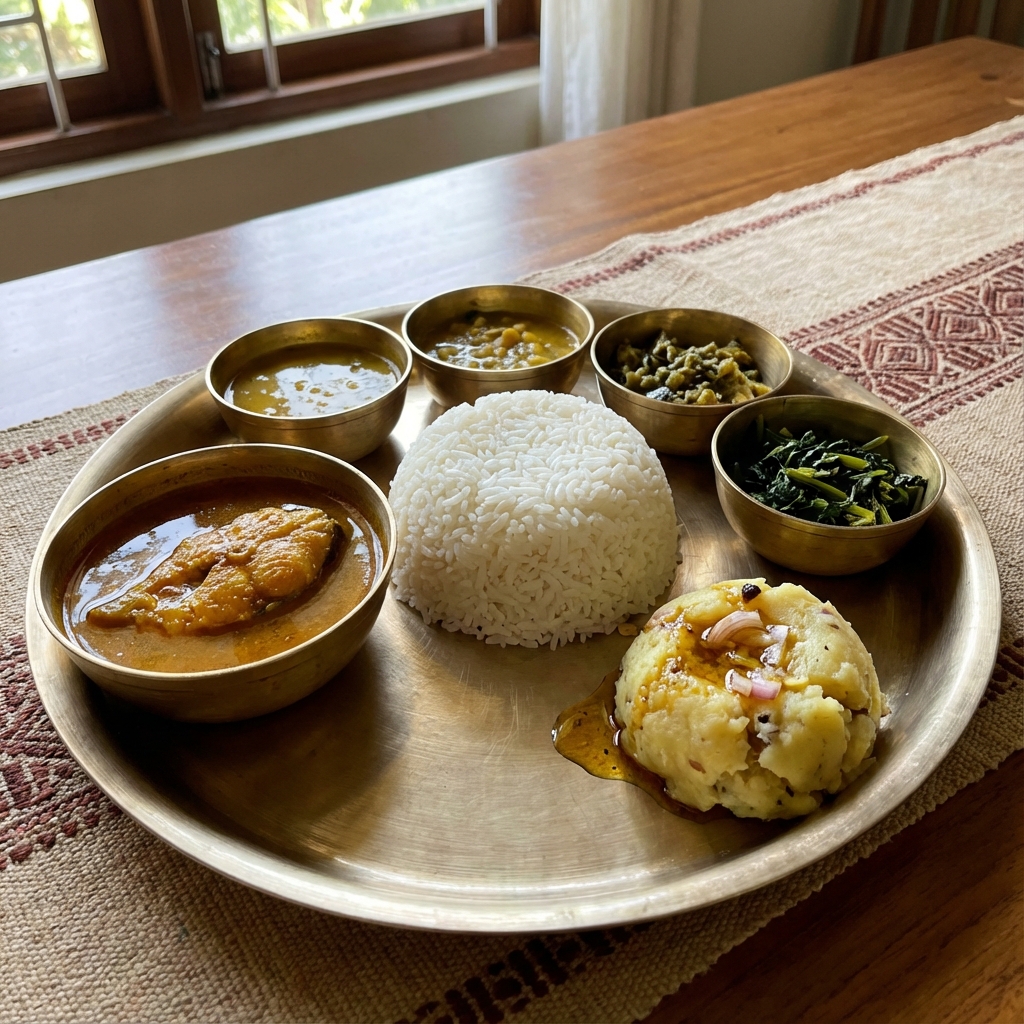
A Bihu celebration without food would be unimaginable. Every household prepares a feast featuring traditional Assamese dishes that are often made only during this festival. These dishes are not just food; they are culinary expressions of gratitude for the harvest.
Traditional Bihu Foods
- Pitha and Laru: Sweet rice cakes and jaggery balls filled with sesame and coconut
- Bika: Fried snacks made from rice flour and jaggery
- Chungri Pitha: Rice cakes with bamboo shoots and jaggery filling
- Tekeli Pitha: Sweet dumplings made with rice flour
- Jarigan: Traditional fermented rice dish
- Assamese Curry and Rice: Flavored with mustard oil and indigenous spices
Bhogali Bihu: Winter's Warm Embrace
Celebrated in January, Bhogali Bihu marks the end of the harvest season and the beginning of winter. The festival centers around "Bhog," meaning eating together. Families gather around bonfires, and the night is filled with warmth, laughter, and togetherness.
The Meji: Fire and Symbol
Central to Bhogali Bihu is the Meji—a bonfire made of bamboo and dried rice stalks. Families gather around it, sharing stories, singing songs, and preparing for the cold months ahead. The Meji is not just practical; it's symbolic—representing the destruction of old hardships and the warmth of community bonds.
Kongali Bihu: The Lean Season
Celebrated in October, Kongali Bihu marks the period when harvested crops are depleted before the new harvest arrives—a time of scarcity. Despite the lean season (kongal means lean or meager), this Bihu is still celebrated, though more modestly, showing the resilience of Assamese people.
Bihu Beyond Assam
Assamese people who have migrated to cities and countries across the world still celebrate Bihu with the same passion and dedication. In major Indian cities and abroad, Assamese associations organize Bihu celebrations, keeping the tradition alive and passing it on to the next generation.
Modern Bihu: Tradition Meets Tomorrow
Today's Bihu celebrations blend ancient traditions with contemporary elements. While the essential spirit remains unchanged, you might see modern music mixed with traditional songs, urban fashions incorporated into traditional attire, and social media used to share Bihu joy globally.
Preserving Authenticity in a Changing World
Young Assamese people are increasingly taking pride in their cultural heritage, learning traditional dances, and participating in community celebrations. Organizations work to document Bihu traditions, ensuring that future generations understand not just how to celebrate, but why these celebrations matter.
The Spirit of Bihu
At its core, Bihu represents the Assamese values of community, gratitude, joy, and connection to the land. It's a festival that doesn't discriminate between rich and poor, educated and uneducated, urban and rural. During Bihu, everyone is equal, everyone celebrates, and everyone is welcome.
Experiencing Bihu
- Visit Assam during Bihu season (April for Rongali, January for Bhogali, October for Kongali)
- Participate in community celebrations in villages
- Learn Bihu dances or songs from local teachers
- Taste traditional Bihu foods prepared by local families
- Attend Bihu celebrations in major cities like Guwahati and Assam
- Connect with Assamese cultural organizations in your region
Conclusion: The Eternal Festival
Bihu is more than a festival; it's a complete expression of Assamese identity. It connects people to their past, anchors them in their present, and gives them hope for their future. As long as Assamese people celebrate Bihu, they celebrate their connection to the land, to each other, and to the eternal cycle of nature that sustains all life.
"Bihu is our heartbeat, our celebration, our identity. In every dance, every song, every pitha, we celebrate ourselves."