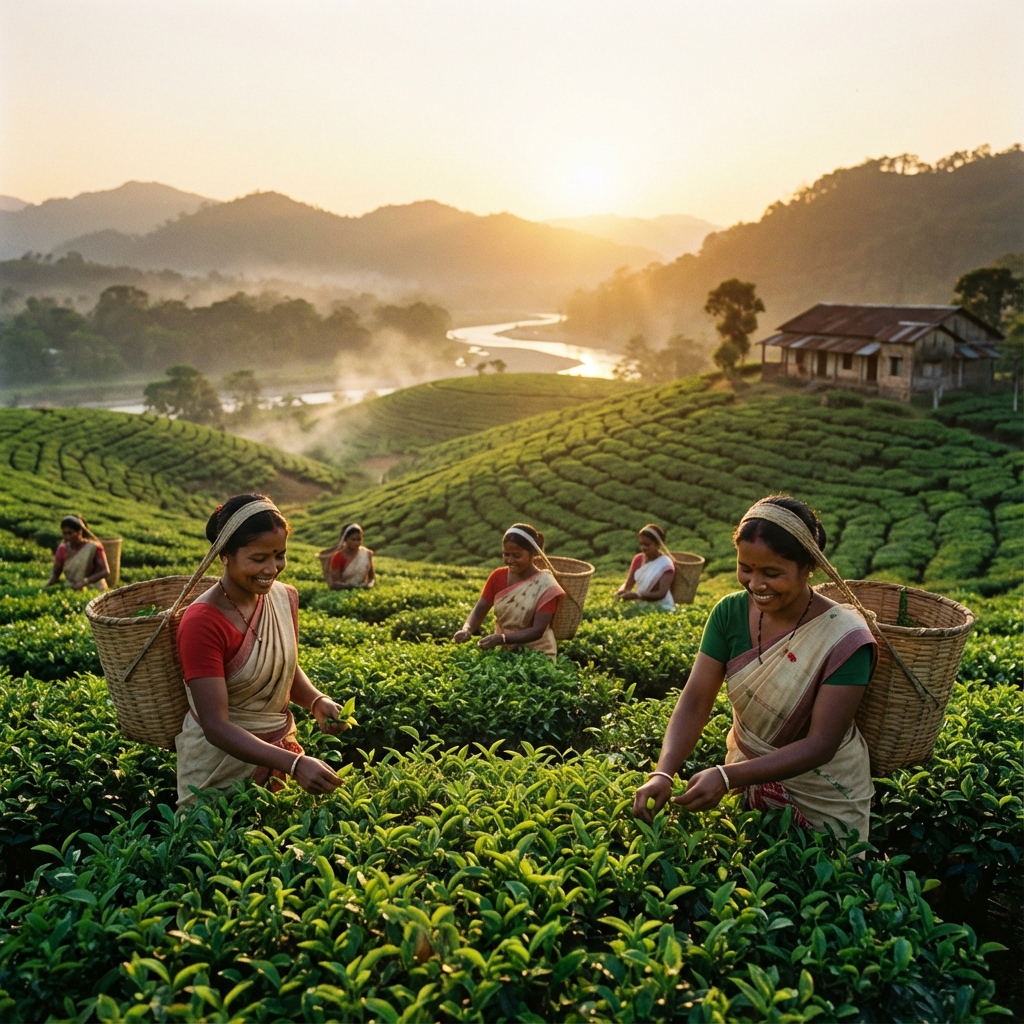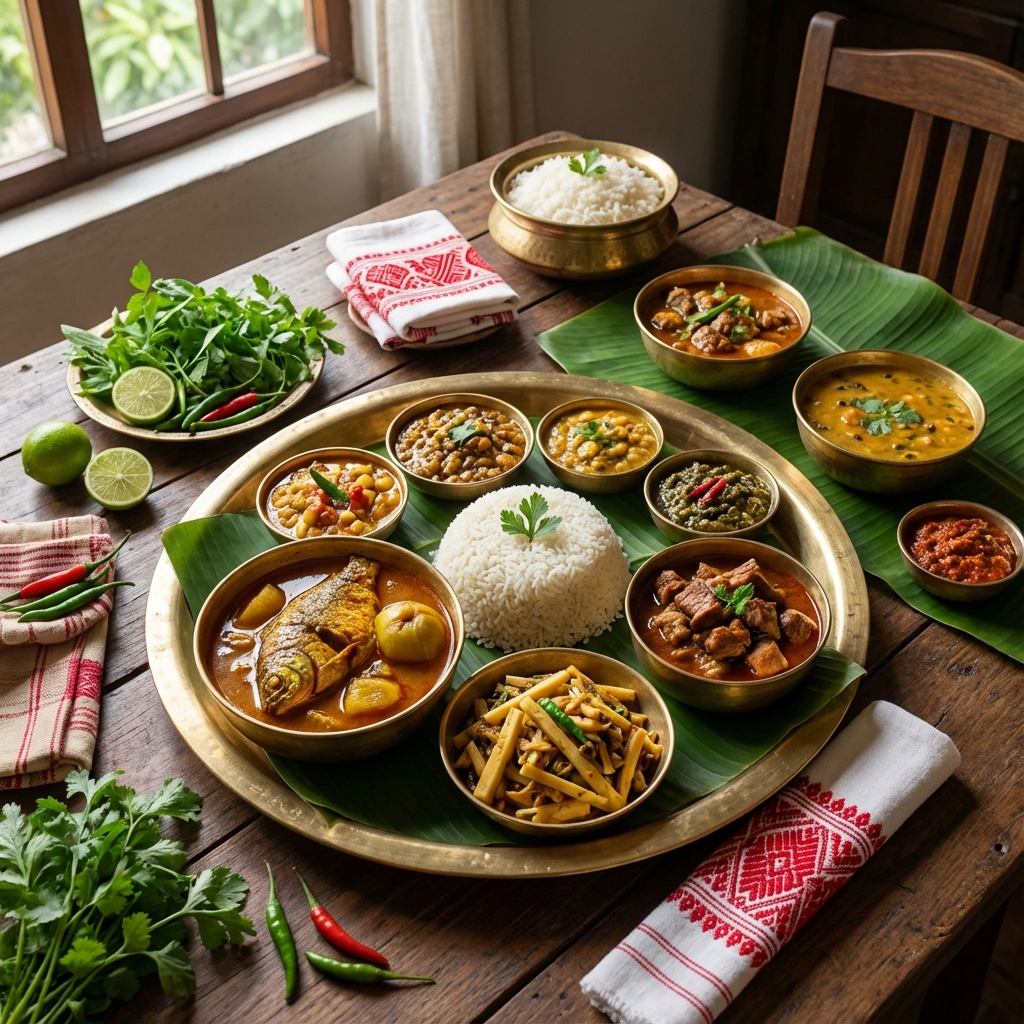
Assamese cuisine is a beautiful blend of simplicity, tradition, and bold flavors that reflect the rich cultural heritage of the Northeast. From the aromatic fish curries to the delicate rice cakes, every dish tells a story of tradition, seasonality, and community.
The Soul of Assamese Food
Assamese food is characterized by its use of fresh, local ingredients and traditional cooking methods passed down through generations. Rice is the staple, complemented by fish, vegetables, and a unique blend of spices that create dishes bursting with flavor.
"In every bowl of Assamese rice lies the essence of the river, the seasons, and the hands that prepared it."
Essential Ingredients of Assamese Cuisine
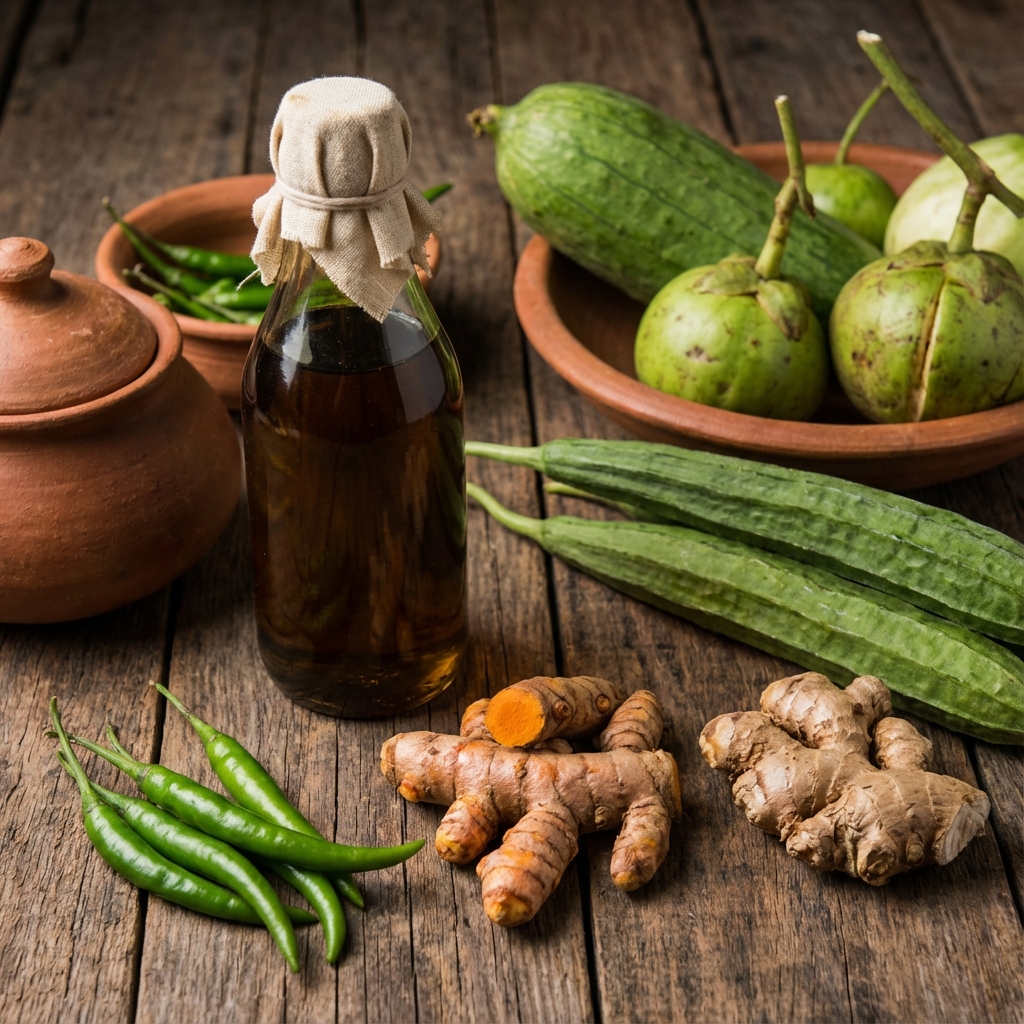
The foundation of Assamese cooking relies on several key ingredients that define its unique flavor profile. Mustard oil provides the characteristic pungent base, while fresh green chilies and turmeric add heat and color. Fresh herbs like coriander and ginger are used liberally, and fermented ingredients like fish paste (ngari) add depth and complexity.
Signature Assamese Dishes
Masor Tenga (Sour Fish Curry)
This iconic dish represents the essence of Assamese cooking—combining fresh river fish with tomatoes, ginger, and green chilies. The sourness comes from tomatoes or sometimes sour fruit, creating a refreshing dish that pairs perfectly with steamed rice.
Xolkpa (Rice Pounded Greens)
A humble yet nutritious dish made with rice and local greens, this represents the resourcefulness of Assamese cooking. Simple yet flavorful, it's a staple in rural kitchens during certain seasons.
Pitha (Rice Cakes)
Sweet and savory rice cakes that define Assamese festivals. Narril Pitha, Til Pitha, and Putol Pitha are just some varieties, each with its own ritual and occasion. These are especially important during Magh Bihu celebrations.
The Spirit of Community Dining
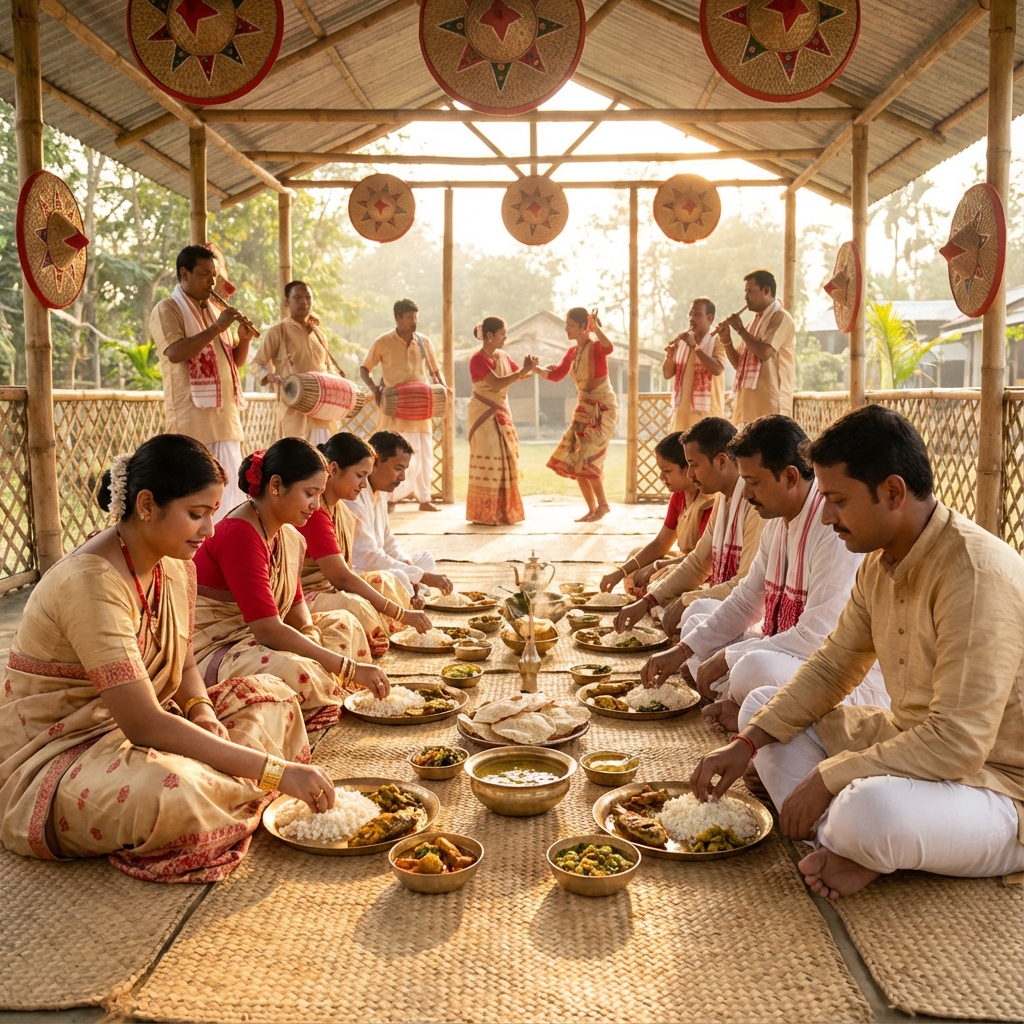
Assamese food is deeply tied to community and celebration. The traditional "Jaapi" (a communal dining arrangement) represents the sharing of food and blessings within the community. Festivals are marked by special meals and preparations that involve the entire family and village.
Seasonal Eating in Assam
Assamese cooking follows the seasons, with different vegetables, fish, and fruits defining each period. Monsoon brings fresh fish and greens, while winter is time for root vegetables and special festival preparations. This natural seasonality makes Assamese cuisine sustainable and economical.
Spring (Bohag)
Festival foods and special rice varieties celebrate the new harvest and New Year.
Summer (Assamese: Jeth)
Light meals using fresh vegetables and cooling ingredients dominate the season.
Monsoon (Assamese: Saaran)
Fresh river fish and seasonal vegetables create the most anticipated dishes of the year.
Winter (Assamese: Shitol)
Special foods and festival preparations mark this season, with rice cakes and sweets being central.
Modern Assamese Cuisine
Today, Assamese cuisine is experiencing a renaissance. Young chefs are exploring traditional recipes while introducing contemporary cooking techniques. The result is a modern take on classic dishes that honors tradition while appealing to contemporary palates.
Restaurants across India and the world are now celebrating Assamese food, making it accessible to a broader audience. Traditional cooking methods like steaming and slow-cooking are being appreciated for their health benefits and flavor preservation.
Conclusion: A Taste of Assam
Assamese cuisine is more than just food—it's a reflection of the land, the people, and their relationship with nature. Every dish carries stories of seasons, celebrations, and the hands that have passed down recipes through generations. To taste Assamese food is to taste the heart of Assam itself.
"Eat like you belong to the land, and the land will belong to you."